
 There are days when I’m teaching a new client, I say something and they just look at me as if I were speaking a different language. And then I realize…I am speaking a different language. As a Pilates instructor, the language and phrases I use to describe movement and to get people to do and feel what I want in their body, are not typical phrases you hear in day to day conversation. If you are new to the Pilates language I thought I would create a list of some of the most common types of phrases I use and explain them in normal English!
 Articulate
Pilates is very spine focused and we often are trying to “articulate through our spine”. What does this mean? Instead of just landing on the mat in one big chunk, you are going to slowly roll down bending through your spine and between each vertabrae in your spine.
Belly to Spine
This cue is often used to remind a student to engage their transverse abdominus. A common cue in Pilates is to imagine pulling your belly button toward your spine to find the engagement of our deepest layer of abdominal muscles.
Melt through your spine
This is another imagery cue. When you are rolling down I often use this cue to encourage clients to slowly and with control articulate their back to the mat (instead of just quickly crashing down).
Tuck your tail
Maybe you didn’t know you had a tail? I often talk about tucking your tail or sticking your tail out behind you in attempts to get clients to move their pelvis into either a posterior or anterior tilt. Of course you have to pretend like you have a tail to make this one effective!
Big expansive inhale
This one is pretty descriptive and is kind of what is sounds like. I’m usually asking you to slowly inhale so much that you can feel your rib cage expands in all directions.
Create length in your low back
I often make statements like create length in your back, or your leg, or even your neck. The Pilates method focuses on learning to use your muscles to decompress your spine and even your limbs so that can move with more ease and efficiency. These cues are used to encourage you to think about what you are trying to create in your body and figure out what muscles you need to engage to do it.
Are there other terms that you have heard in Pilates that you think are part of the Pilates language?

 When people first discover Pilates I find it can be a little overwhelming! One of the things I love about the method is that traditionally it is taught in one on one or small group atmospheres and teachers are trained to teach students to move properly so that they don’t get injured.
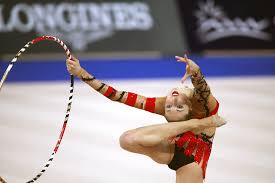 I was talking to a friend the other day ago about Pilates and mentioned I should take her with me sometime. She immediately said “Oh I don’t do any bendy and twisty stuff!” That made me laugh because I knew exactly what she meant. We’ve all seen those pictures of yogis on Instagram and Facebook with their leg wrapped around their head or in some crazy upside down position. And let’s face it – just the thought of doing something like that makes me and most people cringe. Then add to that that the people in those photos are usually wearing crop tops and have tall, lithe bodies — and my cringing turns to groans! But my Pilates sessions are nothing like that!
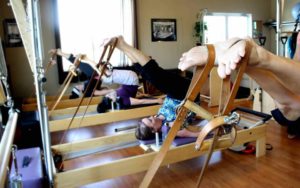 A client was asking me today about how you progress when using the Pilates equipment. She was examining the springs and asked me,” so does someone more advanced than me use a heavier spring? Is that how you make it more challenging?”