
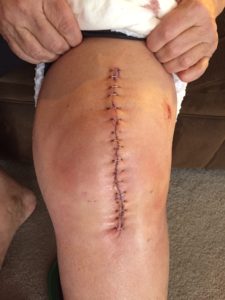
Are you thinking about a knee replacement or maybe you’re finally fed up enough with your knee pain that you decided to get it done? Congratulations!! As a Pilates instructor I see lots of bodies and lots of different things going on in the body. As a general rule, I’m a fan of “do everything you can first before resorting to surgery” in many instances but I’ve really changed that attitude over the years when it comes to knee replacements. I have had the opportunity to work with a lot of clients pre and post knee replacements and all of them have said something like this,” I’m so glad I did it! I can move and be active and not have pain in my knee! I wish I had done it sooner!”
I can also tell you that the clients who I taught Pilates to before their knee replacement swear by the benefits of their Pilates practice in helping them get through their recovery period with much more ease and speedier recoveries. These clients always come back and tell me how their physical therapist is so happy with their quick progress and can’t believe how amazing their recovery is compared to others following the same journey.

Someone I know told me she was going to have a knee replacement soon and when I asked her if she wanted to come in and do some Pilates before the surgery to prepare her she said,”I have 12 exercises they gave me and I’m doing them twice a day.” My response,” That is great- you should continue doing those exercises, but just doing the exercises won’t give you the same amazing benefits of doing Pilates before the surgery. I don’t know what exercises she was given but I am sure they were all great exercises designed to strengthen the muscles in her legs and hips, as well as keep those muscles flexible and mobile. Since she was already doing these exercises I told her we would start her Pilates practice intro by just going over those exercises and applying the Pilates principles to those exercises so she could get more out them.
If you’ve never practiced Pilates before you might be wondering what is so great about Pilates? What makes Pilates exercises different from the exercises the PT gave me as preparation? Here’s my best attempt to explain the difference:
1. Each Pilates exercise is a whole body exercise. We are not just strengthening the leg muscles or the hip muscles! Yes the Pilates exercises will strengthen those leg and hip muscles but each exercise will also have you engaged,connected and working your whole body. This comes in very handy when you are trying to figure out how to safely and effectively move your whole body around after your knee replacement surgery. When the nurses come in to get you up and walking after your surgery you will appreciate your core strength, your upper body strength, and your ability to efficiently move all of your body, all thanks to your Pilates practice!
2. Pilates teaches you to initiate movement from your center. Having strong core muscles that support your body and just knowing how to engage those core muscles is so helpful when you are recovering from an injury that is causing the rest of your body to compensate. By having this knowledge and strength of how to engage those core muscles you will be able to support your body better whether you are using a walker or crutches and you’ll take some of the strain off of the rest of the body.
3. Body Alignment: Pilates is considered a corrective exercise as we are continually trying to create balance in our body by doing movements in alignment and strengthening in alignment. Creating balance in your body is important for everyone, but if you are recovering from an injury or ailment that causes you to compensate in the rest of your body it could save you from chronic pain, tightness and even injuries in the rest of your body long after your knee has healed.
When’s the best time to start Pilates if you are contemplating a knee replacement? Of course the sooner you start the more prepared you’ll be, but honestly even getting a few sessions in before the surgery with an experienced instructor can teach you some basic concepts that will help you immediately before and after the surgery. After surgery you’ll want to talk to your doctor and physical therapist about the timing of starting regular sessions again. The great thing about the Pilates work is that it can truly be adapted to any body so it is possible if you are working with an experienced instructor you can start incorporating the Pilates movements into your recover process sooner than later.
Want to see the benefits of Pilates before and after surgery? Check out this video below of Pilates Instructor Nancy only 2 weeks after her kee replacement surgery:
 I was talking to a friend the other day ago about Pilates and mentioned I should take her with me sometime. She immediately said “Oh I don’t do any bendy and twisty stuff!” That made me laugh because I knew exactly what she meant. We’ve all seen those pictures of yogis on Instagram and Facebook with their leg wrapped around their head or in some crazy upside down position. And let’s face it – just the thought of doing something like that makes me and most people cringe. Then add to that that the people in those photos are usually wearing crop tops and have tall, lithe bodies — and my cringing turns to groans! But my Pilates sessions are nothing like that!
 When did you start Pilates and what inspired you to start?
 Last week I talked about one of the two questions I always ask Kelly when she comes in for a session. Today I talk about the other question,” How far have you run or biked since I last saw you?”. Now you are probably thinking, that’s seems like a pretty reasonable, expected question from your trainer or coach right? But what I think might surprise is you why I ask Kelly that question. Sure, part of the reason I ask her is because I want to know what she has been doing with her body. I want to know if tightness or patterns I see in her movement are from her biking and running or if they are more related to what is going on in her body from her Crohns and Fibromyalgia.
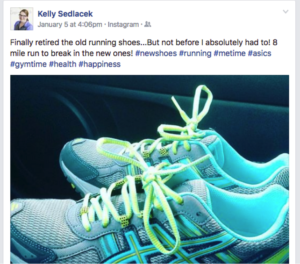 The only down side to using exercise is that sometimes( Ok..many times!) Kelly over does it. In an attempt to feel better emotionally she runs 10 miles or bikes 50 and then her physical body pays the toll for it in the days after. One of the many reasons I think Pilates has been so great for Kelly is that she can get the emotional benefits of a movement practice without all of the harsh effects of hours of running or biking.
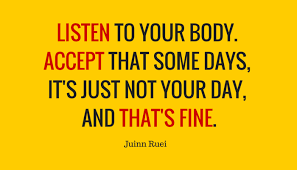 This is my attempt as a teacher to help Kelly figure out how to listen to her own body. My attempt to help her figure out that she is so much more capable than she realizes at figuring out what her body needs and giving her permission to do whatever that is. Giving permission seems like a funny phrase when it comes to movement, but I think it’s appropriate. I think so many people feel like there is a rule book of what you need to do to be in shape, be healthy and fit. The only rule is you listening to your body and doing what works for you, what makes your body and life feel the best.